
Natural Stone Retaining Walls in Carmel Valley, CA
Custom Natural Stone Retaining Walls in Carmel Valley, CA — Upscale Craftsmanship for Hillside Landscaping
What Are Natural Stone Retaining Walls?
A natural stone retaining wall is built using quarried or fieldstone, either stacked dry without mortar or set with mortar joints for added structural bonding. Each stone is individually selected and placed to fit with the surrounding pieces.
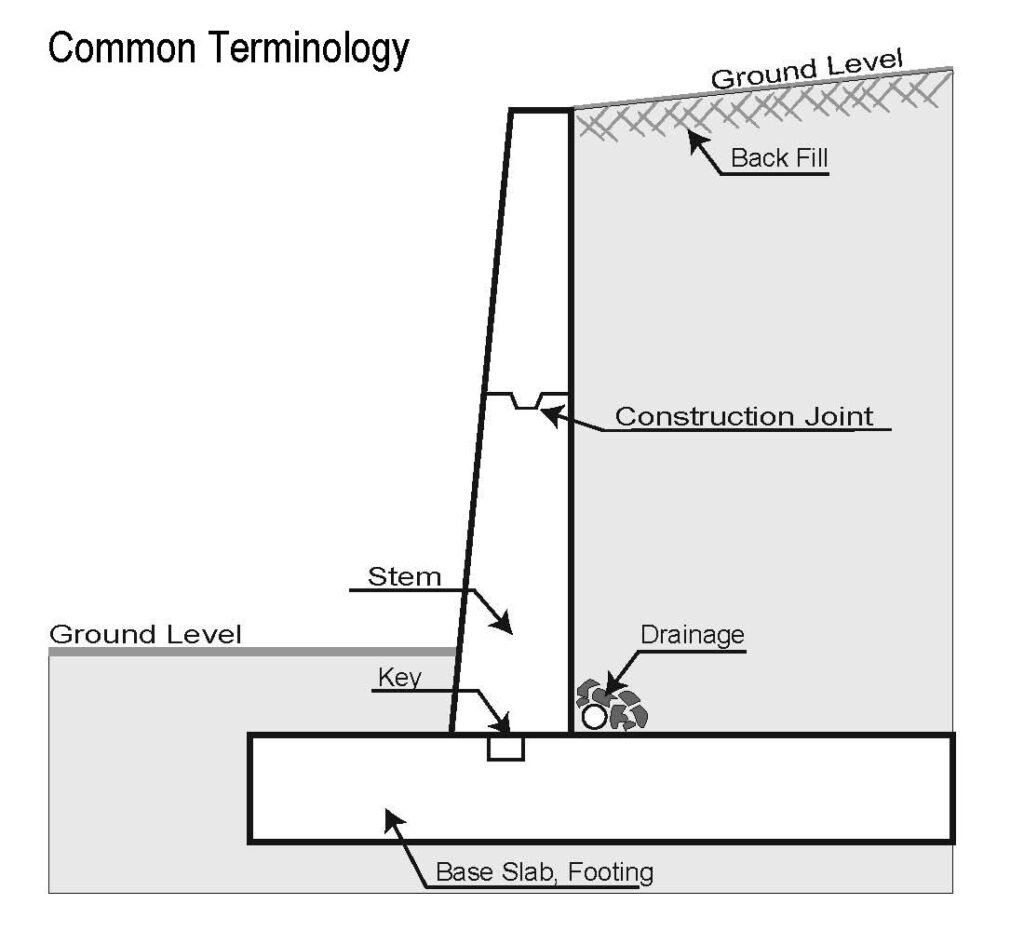
Dry-stack walls rely on the weight, shape, and friction between stones, along with a backward batter typically around 1 to 2 inches per vertical foot, to resist soil pressure. Mortared walls add a bonding agent between stones for additional strength, particularly on taller applications.
Homeowners typically choose natural stone for visible, high-traffic landscaping areas such as front yards, entryways, and terraced gardens, where appearance is as important as function.
The main benefits are a custom, high-end appearance and long-term durability. Because natural stone doesn’t fade or wear in the way manufactured materials can, the finished look tends to improve with age rather than degrade.
Important considerations include wall height limits for dry-stack construction, the added labor cost of hand-fitting stone, and drainage design, which is just as critical for stone walls as for any other retaining wall type.
Stone sourcing is also a factor. Matching stone type, color, and size for a cohesive finished appearance often requires working with a supplier who can provide enough consistent material for the full project.
Natural Stone Retaining Wall Services We Provide
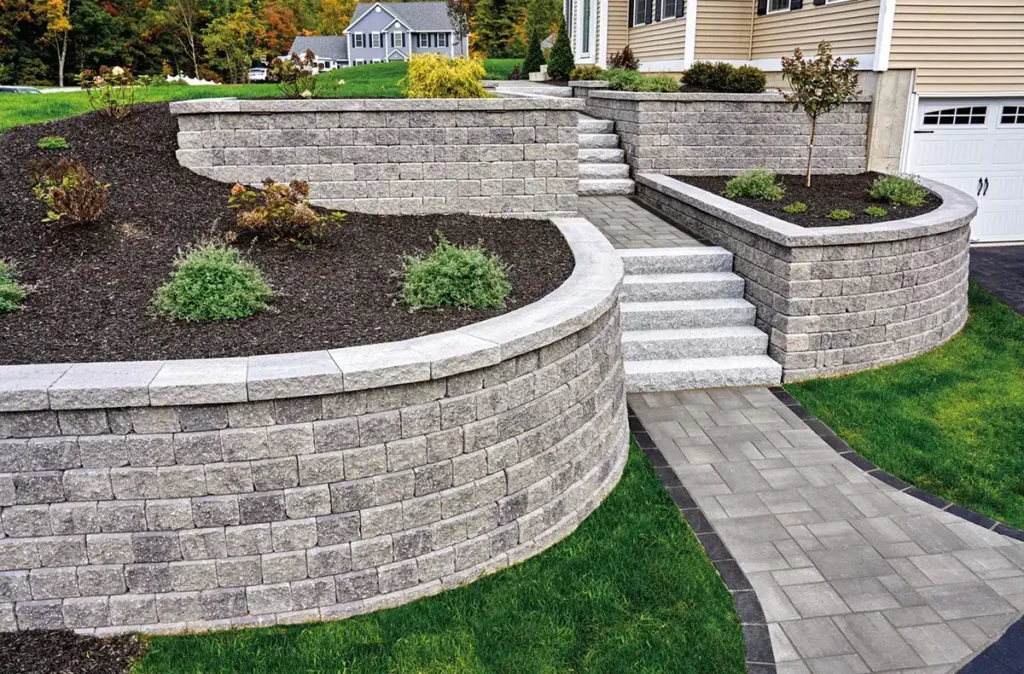
Dry-Stack Natural Stone Wall Construction
Stones are stacked and fitted without mortar, relying on weight, shape, and a batter typically around 1 to 2 inches per vertical foot to resist soil pressure. Dry-stack construction is generally used for walls up to about 3 to 4 feet and is valued for its natural, traditional appearance.
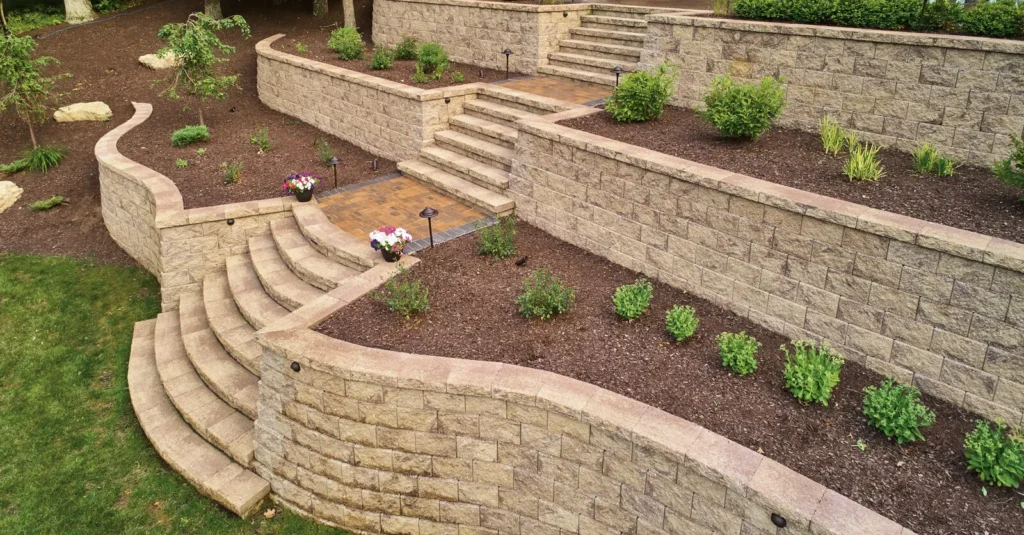
Mortared Natural Stone Retaining Wall Installation
Mortar joints bond the stones together, adding structural strength beyond what dry-stack construction alone provides. This method is commonly used for taller stone walls or those requiring additional stability due to slope or soil conditions.
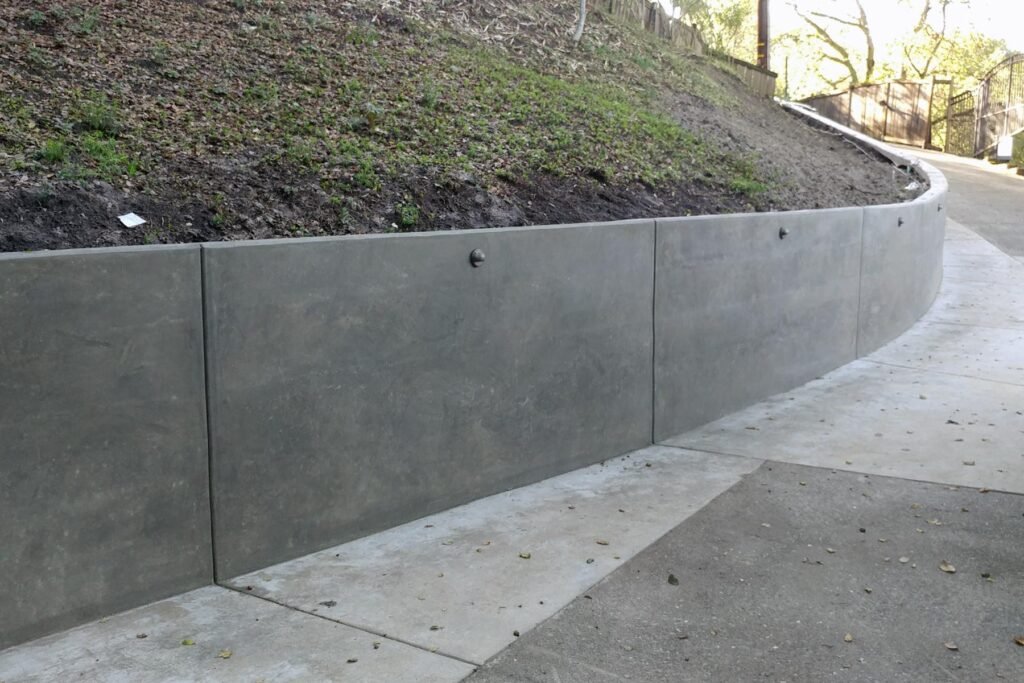
Boulder Retaining Wall Construction
Large individual boulders, often ranging from a few hundred pounds to well over a ton each, are placed and interlocked to create a rugged, natural-looking wall. Boulder walls are especially well suited to hillside and canyon-adjacent properties where a more organic, natural aesthetic is desired.
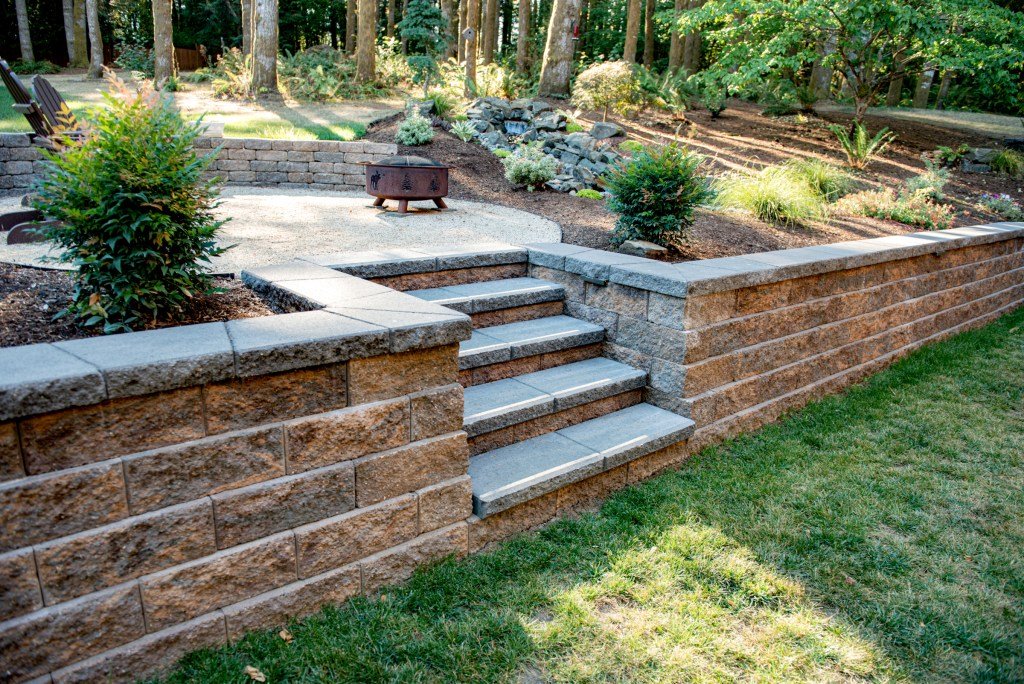
Stone Veneer Over Structural Block or Concrete Core
For taller walls that need the structural capacity of block or poured concrete, a natural stone veneer, typically 4 to 6 inches thick, is applied over the structural core. This combines the engineering strength of concrete or block with the appearance of solid stone.
Flagstone and Terraced Stone Garden Wall Installation
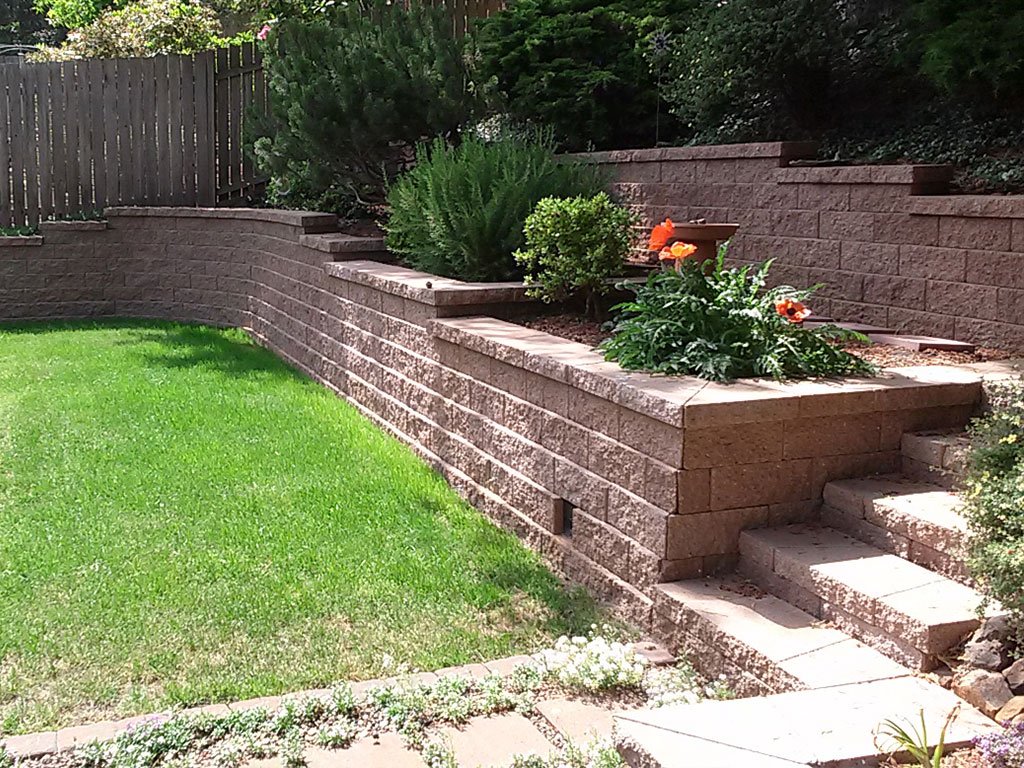
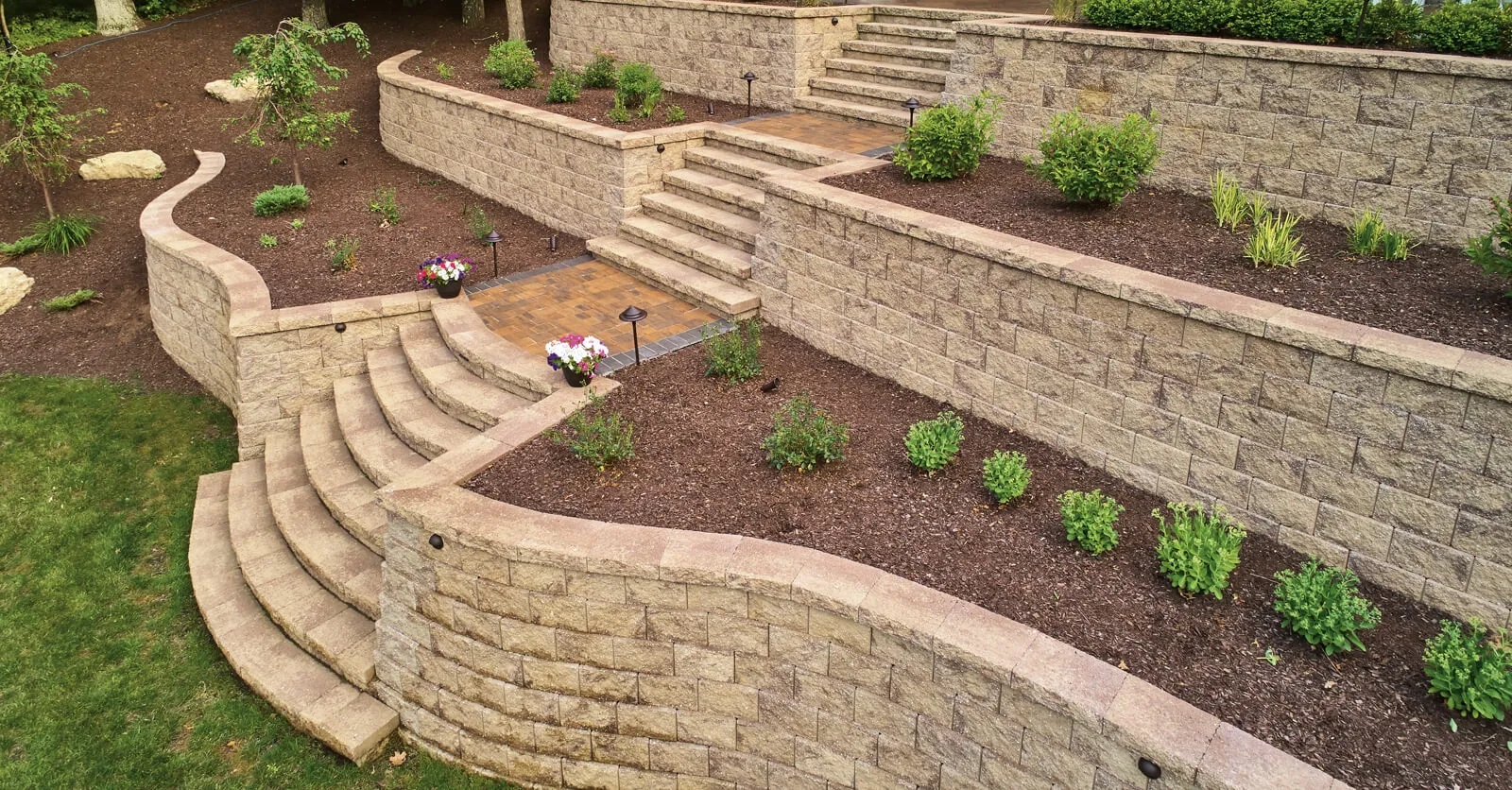
Flat, irregular flagstone pieces are used to build shorter terraced walls, commonly for garden beds and multi-level landscaping features. This approach is popular for creating a series of planting terraces on sloped side yards.
Custom Quarried Stone Selection and Sourcing
Stone type, color, and size are selected to match a property’s design goals and to ensure enough consistent material is available for the full wall. Sourcing decisions are made early in the design process, since material availability can affect both timeline and final appearance.
Benefits of Natural Stone Retaining Walls for Carmel Valley Homeowners
Improves Property Functionality
Like any retaining wall, stone walls create usable flat space on sloped properties, while doubling as a landscaping centerpiece in visible areas like front yards and garden terraces.
Helps Manage Slopes and Soil Movement
The weight and batter of a properly built stone wall resist soil pressure effectively, with mortared construction offering additional structural capacity for taller applications on hillside lots.
Improves Drainage and Erosion Control
Stone walls are installed with a drain pipe and gravel backfill behind the wall face, just as with block or concrete construction, to manage water pressure and prevent erosion at the base.
Enhances Outdoor Appearance
Natural stone offers a textured, organic appearance that manufactured materials can't fully replicate, making it a common choice for properties where the wall itself is meant to be a landscaping feature.
Adds Long-Term Property Value
A well-built stone wall is both a structural and aesthetic investment, often viewed as a premium landscaping feature that reflects the overall quality of a property's outdoor space.
Let's Start Your Retaining Wall Project in Carmel Valley
Let’s chat about your ideas! Getting started is easy – simply reach out with details about your retaining wall project!
Natural Stone Retaining Walls in Carmel Valley, CA
Carmel Valley is a master-planned community in northwestern San Diego, developed primarily from the 1980s onward across a landscape of mesas, valleys, and canyon terrain. The community is home to approximately 39,000 residents, according to the City of San Diego.
The area’s upscale housing stock and emphasis on premium landscaping make natural stone a frequently requested material for retaining walls in visible, high-traffic areas of a property.
Carmel Valley has a mild Mediterranean climate, with wetter winters that make proper drainage behind stone walls just as important as with any other wall material, despite stone’s reputation for durability.
Housing throughout the community includes upscale single-family homes and planned developments, many within HOA communities where natural stone is often favored for its cohesive, high-end aesthetic.
Given the area’s canyon terrain and premium landscaping standards, natural stone retaining walls remain a popular choice for Carmel Valley homeowners investing in both function and appearance.
Carmel Valley at a Glance
- Population: Approximately 39,000 residents (City of San Diego)
- Location: Northwestern San Diego, California
- Terrain: Mesas, canyons, valleys, and graded hillside lots
- Climate: Mild Mediterranean, with wetter winters and dry summers
- Housing: Upscale single-family homes and planned residential communities with an emphasis on premium landscaping
Communities We Serve Near Carmel Valley
In addition to Carmel Valley, natural stone retaining wall services are available in nearby communities including Rancho Peñasquitos, Rancho Bernardo, Rancho Santa Fe, Del Mar, Solana Beach, Fairbanks Ranch, and Scripps Ranch. Many of these areas share a similar emphasis on upscale landscaping, making natural stone a common wall choice throughout the region.
Why Carmel Valley Properties Often Choose Natural Stone Retaining Walls
Front yards, entryways, and other high-visibility areas throughout Carmel Valley are common places where homeowners prioritize appearance alongside slope support, making natural stone a natural fit.
Canyon-adjacent and hillside properties also lend themselves well to boulder and dry-stack stone construction, which can blend naturally into the surrounding terrain rather than looking like an added structure.
The area’s overall emphasis on luxury landscaping and cohesive property design also plays a role, since natural stone is frequently chosen to match or complement existing hardscaping and architectural features.
How Much Do Natural Stone Retaining Walls Cost in Carmel Valley?
Typical Project Cost Ranges
| Project Type | Typical Cost Range | Factors Affecting Price |
|---|---|---|
| Small dry-stack stone wall (under 3 ft, under 30 linear ft) | $9,000 – $18,000 | Wall length, height, stone type |
| Mid-size mortared stone wall (3–5 ft) | $18,000 – $35,000 | Height, mortar work, drainage complexity |
| Boulder retaining wall | $12,000 – $30,000 | Boulder size, placement complexity, equipment needs |
| Stone veneer over block or concrete core | $10,000 – $25,000 | Wall size, veneer thickness, core wall type |
| Flagstone or terraced garden wall system | $6,000 – $16,000 | Number of tiers, stone type, total area |
These ranges are broad estimates. Final pricing depends on wall height, stone type, and labor complexity confirmed during an on-site assessment.
Factors That Affect Natural Stone Retaining Wall Pricing
- Project size – wall length and height directly affect stone quantity and labor hours.
- Stone type – locally sourced fieldstone typically costs less than specialty quarried stone.
- Construction method – mortared walls require more labor and material than dry-stack.
- Labor complexity – hand-fitting stone takes significantly more time than installing manufactured block.
- Site access – limited equipment access can increase labor time for stone placement, especially with boulders.
- Soil conditions – unstable soil may require additional base preparation regardless of wall material.
- Drainage requirements – proper drain pipe and gravel backfill add to both material and labor.
Local Carmel Valley Factors That Affect Cost
- Hillside lots often benefit from boulder or dry-stack stone construction for a natural, blended appearance.
- Canyon terrain can increase equipment and placement complexity, particularly for boulder walls.
- Soil stability on graded lots may call for extra base preparation before stone placement begins.
- Drainage requirements are often more extensive due to slope and seasonal rainfall patterns.
- Luxury landscaping goals frequently drive the choice of stone over block or plain concrete.
- Property accessibility on hillside streets can affect stone delivery and equipment staging, especially for large boulders.
Why Detailed Estimates Matter
A detailed estimate for a stone wall should specify construction method, stone type, and drainage design, since labor is the primary cost driver for stone construction, not just material.
Transparent pricing also helps homeowners understand how stone sourcing and hand-labor requirements affect the final cost compared to manufactured wall materials.
Why Choose Retaining Wall Contractor Carmel Valley?
Local Knowledge of Carmel Valley Properties
Understanding local hillside soil and canyon terrain helps ensure a stone wall is built with the correct base, batter, and drainage, not just placed for appearance.
Quality Materials and Construction Practices
Stone sourcing, base compaction, and drainage installation are treated as essential fundamentals, since a stone wall’s beauty depends on its structural integrity holding up over time.
Professional Installation Approach
Every stone wall project starts with a site assessment to determine the right construction method, whether dry-stack, mortared, or veneer over a structural core.
Clear Communication From Start to Finish
Homeowners are kept informed about stone selection, sourcing timelines, and construction method throughout the project.
Homeowner-Focused Service
The goal is a stone wall that reflects the property’s design vision while being built to the correct structural standards for its height and location.
Need Help?
Frequently Asked Questions About Natural Stone Retaining Wall in Carmel Valley
Below are some of the most common questions Our Network get from families about Retaining Wall. If you have any other questions contact us!
How tall can a dry-stack natural stone wall be built?
Dry-stack stone walls are generally limited to about 3 to 4 feet without additional structural support. Taller applications typically require mortared construction or a stone veneer over a structural block or concrete core.
Is natural stone more expensive than block or concrete retaining walls?
Yes, generally. Natural stone typically costs more per square foot than segmental block due to the significant hand-labor involved in selecting and fitting each stone, though pricing can vary based on stone type and sourcing.
How long does a natural stone retaining wall last?
A properly built stone wall, whether dry-stacked or mortared, commonly lasts 50 to 100 years or more, provided drainage is functioning correctly behind the wall. Stone itself doesn’t degrade the way some manufactured materials can over time.
What's the difference between dry-stack and mortared stone walls?
Dry-stack walls rely on the weight and interlocking shape of the stones alone, without any bonding agent, and are generally limited to shorter heights. Mortared walls use mortar joints between stones for added structural bonding, allowing for taller or more structurally demanding applications.
How much do boulder retaining walls cost compared to smaller stone walls?
Boulder walls typically range from $12,000 to $30,000 for a residential project, with cost driven largely by boulder size and placement complexity rather than total wall area, since heavy equipment is often needed to move and set larger boulders.
Can natural stone be used as a veneer over an existing block or concrete wall?
Yes. A stone veneer, typically 4 to 6 inches thick, can be applied over a structural block or concrete core, combining the engineering capacity of those materials with the appearance of solid natural stone.
What's the batter, or lean, on a typical dry-stack stone wall?
Most dry-stack stone walls use a batter of roughly 1 to 2 inches of setback per vertical foot, which helps the wall resist soil pressure using its own weight and stacked geometry.
Contact Retaining Wall Contractor Carmel Valley Today
If you’re looking for a retaining wall that combines structural function with a custom, high-end appearance, natural stone is often the right choice for visible areas of your property. Every stone project depends on the specific slope, soil, and design goals involved, so the right approach starts with a proper site assessment.